
AI Visibility Tracking: The Missing Layer in Local Business Marketing

Digitaldoor • March 18, 2026

Introduction: If You Can’t See It, You Can’t Win It

Most local businesses in Australia are still asking:


 “Where do we rank on Google?”


But that’s no longer the right question. Because today, your business might be:


  • Recommended in ChatGPT
  • Featured in Google AI Overviews
  • Visible in Maps but not Search
  • Mentioned by AI… without you even knowing


And here’s the problem.....


You can’t track what you don’t measure


Welcome to the next evolution of digital marketing: AI Visibility Tracking.


What Is AI Visibility Tracking?

AI Visibility Tracking is the process of measuring:


  • Where your business appears across AI-driven platforms
  • How often you’re recommended
  • What entities, keywords, and queries trigger your visibility
  • How you compare against competitors in AI responses


It goes beyond:


  • Rankings
  • Clicks
  • Impressions


And focuses on what actually matters now:


Are you being recommended by AI?

Why Traditional SEO Reporting Is Broken

Most reporting tools still focus on:


  • Keyword rankings
  • Website traffic
  • Click-through rates


But the reality is:


  • AI Overviews reduce clicks dramatically
  • Users get answers without visiting your site
  • Recommendations happen before traffic even exists


In fact, businesses globally are struggling to measure AI impact — with over half unable to clearly demonstrate ROI from AI initiatives due to poor measurement frameworks


That same gap now exists in local business marketing.


You might be:


  • Influencing decisions
  • Being mentioned by AI
  • Winning customers


…but your reporting says:


❌ “No traffic”
❌ “No conversion”

The Shift: From Traffic Tracking to Visibility Tracking

Old model:


  • Search → Click → Website → Conversion


New model:


  • Question → AI Answer → Recommendation → Decision


👉 No click required.


This means:


Visibility happens before analytics can detect it.

What Needs to Be Tracked in 2026

To compete in AI-driven search, businesses need to track visibility across:

1. AI Recommendations

  • Are you mentioned in ChatGPT responses?
  • Are reference in Google AI mode?
  • Are you included in AI-generated “best of” lists?

2. Google AI Overviews

  • Are you cited or referenced?
  • Are competitors being pulled instead of you?

3. Entity Recognition

Does AI understand:


  • Who you are
  • What you do
  • Where you operate

4. Query-Level Visibility

  • Which questions trigger your business?
  • Which don’t?

5. Sentiment & Positioning

How are you described?


  • “Trusted”
  • “Affordable”
  • “Specialist”

The Biggest Blind Spot: Businesses Don’t Know When They’re Invisible

Here’s what’s happening right now:


  • A customer asks ChatGPT for a recommendation
  • Your competitor is suggested
  • You never even knew the question was asked


No:


  • Impression
  • Click
  • Data


Just a lost lead.


This is why...


AI visibility is not just a marketing metric — it’s a revenue signal.

Introducing AI Visibility Reporting (Digitaldoor Framework)

At Digitaldoor, we’ve built a system to solve this exact problem.


Based on our framework outlined here:
https://www.digitaldoor.ai/introducing-local-business-ai-reporting-next-generation-insights


The goal:


Turn invisible AI interactions into measurable insights.

What AI Visibility Reporting Actually Shows You

1. Where You Appear (Across Platforms)

  • Google Search
  • Google Maps
  • AI Overviews
  • Google AI Mode
  • ChatGPT

2. Where You Don’t Appear

  • Missed opportunities
  • Competitor dominance zones

3. What Triggers Your Visibility

  • Questions
  • Keywords
  • Context

4. Who AI Recommends Instead

  • Direct competitors
  • Indirect competitors
  • Aggregators / directories

Why This Matters More Than Rankings

Because the game has changed:


  • Rankings = visibility
  • AI recommendations = selection


And selection happens:


  • Before clicks
  • Before analytics
  • Before your CRM

The Data Problem: Why Most Businesses Can’t Track AI Yet

The biggest challenge is:


AI visibility isn’t linear


Unlike SEO:


  • There is no “position 1”
  • There is no consistent result page
  • Every query can produce a different answer


This creates:


  • Fragmented data
  • Inconsistent visibility
  • Hard-to-measure outcomes


And as research shows, data fragmentation and lack of unified measurement are major barriers to effective AI adoption.

The Competitive Advantage: Early Visibility Tracking

Just like early SEO adopters dominated Google…


Early AI visibility adopters will dominate AI discovery


Because:


  • AI learns from patterns
  • Recommendations reinforce authority
  • Visibility compounds over time


And importantly:


Markets reward businesses that implement real AI strategies, not just talk about them.

What Happens When You Start Tracking AI Visibility

You move from:


❌ Guessing
❌ Hoping
❌ Reacting


To:


✅ Knowing
✅ Measuring
✅ Optimising


You can:


  • Identify missing content
  • Strengthen entity signals
  • Build authority where it matters
  • Influence AI recommendations

The Future: AI Visibility Will Become a Core KPI

Within the next 12–24 months:


  • Businesses will track AI mentions like rankings
  • “Recommended by AI” will become a trust signal
  • Marketing dashboards will include AI visibility metrics


And those who don’t adapt?


Will slowly disappear from discovery.

Final Thought

You don’t lose leads because you’re not good.


You lose leads because:


You’re not visible where decisions are being made


And today…


That’s inside AI.

Recent Posts

By Digitaldoor March 18, 2026
If you’re a local business owner in Australia, you’ve probably noticed something strange: Website traffic feels inconsistent Google rankings don’t guarantee leads anymore Customers say things like “I found you on ChatGPT” This isn’t a trend. It’s a structural shift in how people find and choose local businesses. Today, leads don’t come from one platform — they come from multiple discovery systems , each with its own rules, algorithms, and trust signals . And if you’re only optimising for one? You’re invisible everywhere e lse.

By Digitaldoor February 21, 2026
Introduction
Smartphone displaying the
By Digitaldoor February 15, 2026
What Changed When We Turned on AI Reporting
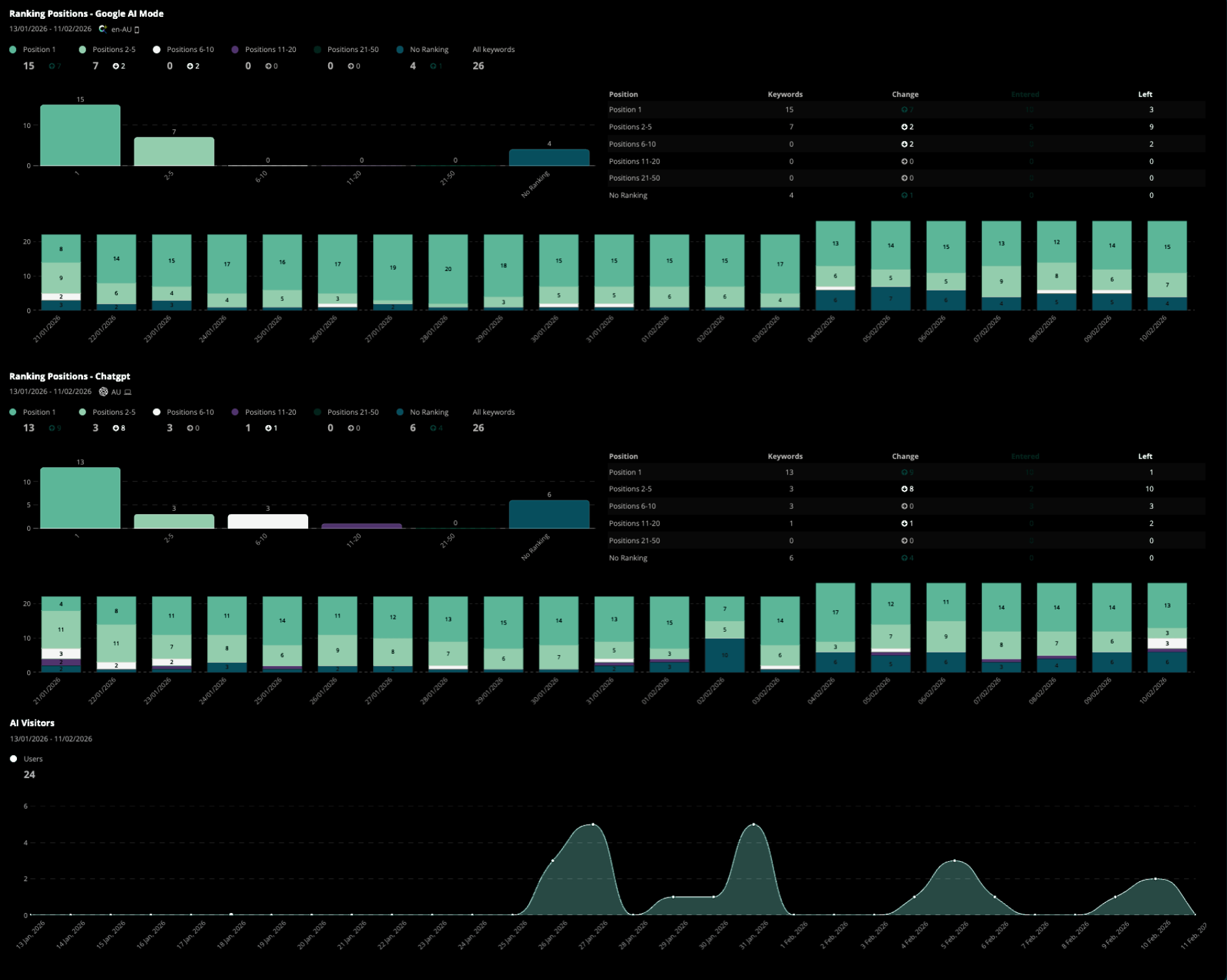
Dashboard visualizing data, featuring stacked bar charts in teal and dark backgrounds, displaying metrics over time.
By Digitaldoor January 12, 2026
What Is Local Business AI Reporting?
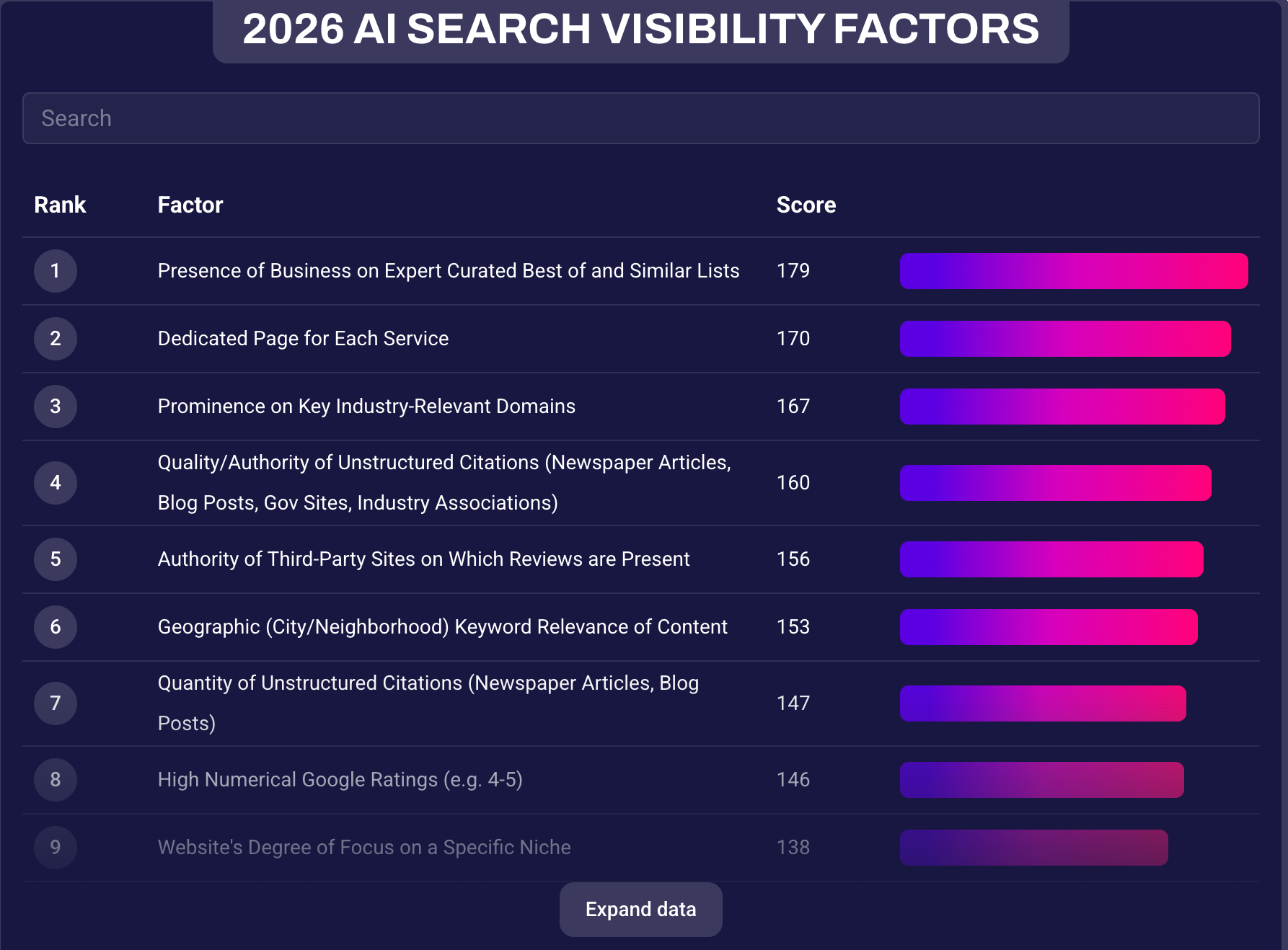
Infographic: 2026 AI search visibility factors. Rankings and scores displayed in purple and pink bar graphs.
By Digitaldoor November 10, 2025
Why Does This Factor Now Outrank Others?

Man in apron smiles, standing in doorway of open restaurant with “We’re Open” sign.
By Digitaldoor October 16, 2025
Remember the days when stuffing a page with keywords was enough to rank on Google? Yeah, those days are long gone. Today, Google isn't just scanning for exact-match keywords — it's trying to understand what people actually mean when they type a query. It’s a major shift from keyword-based search to intent-driven search, and it’s reshaping everything from SEO to how we build conversational AI. In this blog, we’ll break down: What’s changed in Google Search The rise of user intent and semantic search Why the “fan out” strategy matters now more than ever How this shift impacts content strategy, RAG systems, and chatbots

Button with
By Digitaldoor September 17, 2025
Google AI Mode is the latest shift in how Google understands, ranks, and presents search results. It is currently rolling out across the US as we speak. Rather than simply matching keywords, Google AI Mode uses artificial intelligence to understand intent, context, and meaning behind your searches. It's part of what Google calls the Search Generative Experience (SGE) — where AI-enhanced responses pull from a wide context of sources to deliver smarter, faster, and more relevant answers. For local businesses, this is a game-changer.

Woman's face overlaid with colorful binary code, set against a dark background, suggesting technology and data.
By Digitaldoor August 28, 2025
In the next few years, the way people find and interact with local businesses online will change dramatically. And the biggest shift? Your website’s most frequent visitor won’t be a person—it’ll be artificial intelligence (AI)