
The New Reality: 6 Platforms Driving Local Leads in Australia

Digitaldoor • March 18, 2026

Introduction: The Lead Generation Shift Has Already Happened

If you’re a local business owner in Australia, you’ve probably noticed something strange:


  • Website traffic feels inconsistent
  • Google rankings don’t guarantee leads anymore
  • Customers say things like “I found you on ChatGPT”


This isn’t a trend. It’s a structural shift in how people find and choose local businesses.


Today, leads don’t come from one platform — they come from multiple discovery systems, each with its own rules, algorithms, and trust signals.


And if you’re only optimising for one? You’re invisible everywhere else.

The New Reality: 6 Platforms Driving Local Leads in Australia

Local business discovery has fragmented into six core channels:

1. Google Organic Search (Traditional SEO)

This is the classic:


  • “plumber Wollongong”
  • “best electrician near me”


Google still dominates search in Australia with over 90% market share.


But here’s the problem:


  • Clicks are disappearing
  • Over 70% of searches are now zero-click
  • Users get answers without visiting websites


What this means:


Ranking #1 is no longer enough.


You need:


  • Structured, answer-first content
  • Strong authority signals
  • Pages designed for extraction, not just ranking

2. Google Map Pack (Top 3 Listings)

This is where high-intent leads live.


When someone searches:


  • “mechanic near me”
  • “dentist open now”


They don’t scroll — they click the map.


What drives visibility here:


  • Google Business Profile optimisation
  • Reviews (volume + sentiment)
  • Proximity + relevance
  • Local engagement signals


👉 This is conversion-focused visibility, not just traffic.

3. Google Maps (Navigation-Based Discovery)

This is different again.


Users aren’t searching — they’re browsing and deciding.


They:


  • Compare ratings
  • Read reviews
  • Check photos
  • Look at opening hours


What matters:


  • Review quality (not just quantity)
  • Photo credibility
  • Category optimisation
  • Real-world trust signals


👉 This is where decisions are made, not just discovered.

4. Google AI Overviews (Zero-Click Answers)

These are the AI-generated summaries at the top of search.


They:


  • Answer the question instantly
  • Recommend businesses
  • Reduce the need to click


And they’re changing everything.


  • When AI Overviews appear, only ~17% of users click through


What this means:


If your business isn’t mentioned in the summary. You don’t exist.


What AI Overviews look for:


  • Clear, structured answers
  • Trusted sources
  • Consistent business mentions
  • Strong topical authority

5. Google AI Mode (Conversational Search Inside Google)

This is Google’s response to ChatGPT.


Users now ask:


  • “Who’s the best mechanic on the Gold Coast for European cars?”
  • “What’s the most reliable plumber in Nowra?”


And Google responds conversationally.


Key shift:


Google is no longer just indexing pages. It’s interpreting, summarising, and recommending


What matters:


  • Entity clarity (who you are, what you do, where you serve)
  • Consistent brand mentions across the web
  • Context-rich content

6. ChatGPT (AI Recommendation Engine)

This is the fastest-growing lead source most businesses aren’t tracking.


  • Australia is one of the highest adopters of ChatGPT globally 
  • 1 in 3 Australians use AI tools weekly 
  • AI-driven traffic has grown over 1,200% year-on-year


And here’s the kicker:


ChatGPT doesn’t “rank” businesses — it recommends them.


What influences ChatGPT:


  • Website content clarity
  • Third-party mentions
  • Reviews and reputation
  • Semantic consistency


Unlike Google…


  • There is no “position 1”


There is only:


  • Recommended
  • Not recommended

The Big Insight: Each Platform Requires a Different Strategy

Here’s where most businesses get it wrong:


They apply one SEO strategy across everything.


But each platform works differently:

Platform How Users Behave What Wins
Google Organic Search → click SEO + content
Map Pack Search → call Reviews + proximity
Maps Browse → compare Trust + visuals
AI Overviews Read → no click Authority + structure
AI Mode Ask → decide Context + entity clarity
ChatGPT Ask → trust Reputation + mentions

👉 This is not one channel.


👉 This is six different algorithms.

Why Most Local Businesses Are Becoming Invisible

Right now, most businesses are:


  • Optimised for 2015 SEO
  • Focused only on rankings
  • Ignoring AI discovery


Meanwhile:


  • AI tools are influencing decisions before clicks 
  • Traffic is shifting away from websites
  • Recommendations are replacing search results


This is why:


👉 You can rank well… and still lose leads

The Future: From SEO to AI Visibility

The game has changed from:


“How do I rank?”


To:


“How do I get recommended?”


This is where AI Visibility comes in.


It’s about ensuring your business is:


  • Found across all recommendation platforms
  • Trusted by AI systems
  • Structured for extraction and recommendation


Because in 2026 and beyond:


👉 The businesses that win are not always the ones that rank

👉 They’re the ones that get chosen by AI

How Digitaldoor Solves This

At Digitaldoor, we don’t just optimise for SEO.


We optimise for:


  • Google Search
  • Google Maps
  • Google AI Overviews
  • Google AI Mode
  • ChatGPT and AI platforms


We build:


  • AI-ready content
  • Entity-driven SEO structures
  • Review and reputation frameworks
  • Multi-platform visibility systems

Final Thought

Local search hasn’t disappeared.


It’s expanded.


And the businesses that understand this shift early…


Will dominate their market.

Recent Posts

By Digitaldoor March 18, 2026
Introduction: If You Can’t See It, You Can’t Win It

By Digitaldoor February 21, 2026
Introduction
Smartphone displaying the
By Digitaldoor February 15, 2026
What Changed When We Turned on AI Reporting
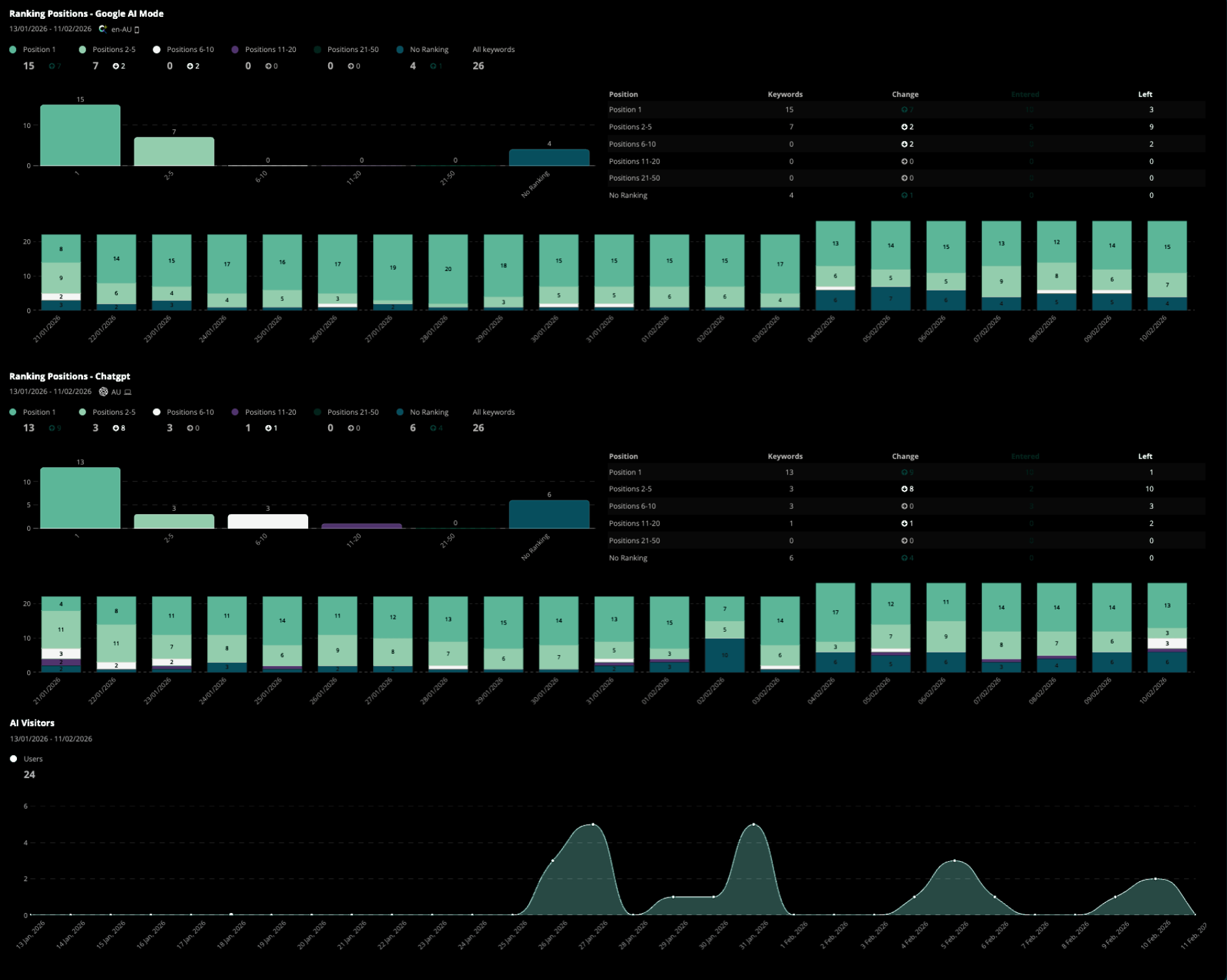
Dashboard visualizing data, featuring stacked bar charts in teal and dark backgrounds, displaying metrics over time.
By Digitaldoor January 12, 2026
What Is Local Business AI Reporting?
Infographic: 2026 AI search visibility factors. Rankings and scores displayed in purple and pink bar graphs.
By Digitaldoor November 10, 2025
Why Does This Factor Now Outrank Others?
Man in apron smiles, standing in doorway of open restaurant with “We’re Open” sign.
By Digitaldoor October 16, 2025
Remember the days when stuffing a page with keywords was enough to rank on Google? Yeah, those days are long gone. Today, Google isn't just scanning for exact-match keywords — it's trying to understand what people actually mean when they type a query. It’s a major shift from keyword-based search to intent-driven search, and it’s reshaping everything from SEO to how we build conversational AI. In this blog, we’ll break down: What’s changed in Google Search The rise of user intent and semantic search Why the “fan out” strategy matters now more than ever How this shift impacts content strategy, RAG systems, and chatbots
Button with
By Digitaldoor September 17, 2025
Google AI Mode is the latest shift in how Google understands, ranks, and presents search results. It is currently rolling out across the US as we speak. Rather than simply matching keywords, Google AI Mode uses artificial intelligence to understand intent, context, and meaning behind your searches. It's part of what Google calls the Search Generative Experience (SGE) — where AI-enhanced responses pull from a wide context of sources to deliver smarter, faster, and more relevant answers. For local businesses, this is a game-changer.

Woman's face overlaid with colorful binary code, set against a dark background, suggesting technology and data.
By Digitaldoor August 28, 2025
In the next few years, the way people find and interact with local businesses online will change dramatically. And the biggest shift? Your website’s most frequent visitor won’t be a person—it’ll be artificial intelligence (AI)