

AI Visibility for Local Business: Complete Guide to Getting Found by AI

Digitaldoor • February 21, 2026

Introduction

AI visibility for local business is about making sure AI systems can clearly understand, trust, and recommend your business when potential customers ask questions. Instead of scrolling through search results, Australians are now asking tools like ChatGPT, Google’s AI-powered results, and voice assistants who they should use locally — and expecting a direct answer.


At Digitaldoor, we see this as a fundamental shift in how local customers discover and choose businesses. AI visibility isn’t about rankings alone anymore. It’s about whether your business is mentioned, understood, and confidently recommended by AI.


This guide is written for Australian local business owners, multi-location operators, and marketing managers who want to stay visible as AI-driven search becomes the norm. We work with hospitality, healthcare, trades, legal services, retail, and professional services across defined local areas — and the same principles apply across all of them.


Why this matters right now: a growing share of Australians are using AI tools to find local services, and AI-generated answers typically surface only two or three businesses. If your business isn’t one of them, you simply don’t exist in that moment.


By the end of this guide, you’ll understand:


  • How AI systems analyse and choose local businesses
  • Which data sources matter most for AI recommendations
  • The step-by-step AI visibility framework we use at Digitaldoor
  • How to track and measure AI visibility for local business over time

Understanding AI Visibility for Local Business

The way customers find local businesses has changed dramatically. Instead of browsing lists, they’re asking AI direct questions and acting on the answer. This shift has major implications for how local businesses need to present themselves online.

What AI Visibility Means for Local Businesses

AI visibility refers to how often and how confidently your business appears in AI-generated answers, not where you rank on a traditional results page.


When someone asks:

“Who’s the best electrician near me for urgent repairs?”

AI doesn’t return ten options. It provides a short answer — often naming one to three businesses it believes are the best fit.


To do this, AI systems build a composite understanding of your business by analysing:


  • Your website content
  • Reviews and reputation signals
  • Business directories and maps
  • Mentions across trusted third-party sites


For local businesses, this means traditional SEO alone is no longer enough. At Digitaldoor, we optimise for AI comprehension, not just visibility — ensuring AI can confidently match your services to real customer questions.

How AI Discovery Differs from Traditional Search

Traditional search rewarded keywords, backlinks, and rankings. AI-driven discovery rewards clarity, consistency, and credibility.


Instead of clicking results, users receive an answer. This creates a zero-click environment where:


  • There’s no page two
  • There’s no “almost visible”
  • You’re either recommended — or ignored


That’s why AI visibility for local business requires a different mindset. We’re no longer optimising pages — we’re training AI systems to understand and trust your business.

AI Data Sources and Selection Process

To improve AI visibility, it’s essential to understand what information AI platforms rely on when generating local recommendations.

Primary AI Data Sources

AI systems typically pull from three main data categories:


Business websites
Your website is the primary source of truth. Clear service descriptions, location details, FAQs, and conversational content help AI understand exactly what you do and who you serve.


Reputable mentions
Mentions across local media, industry publications, community websites, and authoritative platforms act as trust signals. When others talk about your business, AI takes notice.


Business directories
Platforms like Google Business Profile, Apple Maps, Yelp, and industry-specific directories provide structured, verifiable data that AI uses to confirm your legitimacy and service areas.


Together, these sources form the foundation of AI visibility for local business.

AI Trust and Credibility Signals

AI doesn’t just look at star ratings. It analyses review language, extracting themes such as reliability, responsiveness, expertise, and outcomes.


Consistency is critical. If your Google profile looks strong but other platforms tell a different story, AI confidence drops. Structured data (such as LocalBusiness schema) also plays a key role by removing ambiguity and helping AI systems interpret your business accurately.

Geographic and Local Context Factors

Local relevance is non-negotiable. AI platforms look for signals that prove you genuinely serve specific areas, not just claim them.


This includes:


  • Suburb- or region-specific service pages
  • Locally relevant FAQs
  • Content that reflects real community needs


For example, a business serving multiple suburbs must help AI connect location-based questions directly to its services.

Implementing AI Visibility Optimisation

Once you understand how AI evaluates local businesses, the next step is execution. At Digitaldoor, we follow a structured, repeatable framework.


Step-by-Step AI Optimisation Process


Here’s the sequence we recommend for improving AI visibility for local business:


  1. Audit current AI visibility
    Test conversational queries across ChatGPT, Google AI results, voice assistants, and platforms like Perplexity. Identify who appears and why.
  2. Standardise business information everywhere
    Consistent name, address, phone number, and service details across all platforms reduces confusion and boosts AI confidence.
  3. Optimise website content for conversational intent
    Write content that answers real customer questions in natural language, meets customer intent, not keyword-heavy marketing copy.
  4. Implement structured data
    LocalBusiness and FAQ schema helps AI systems extract accurate details without guesswork.
  5. Build detailed, descriptive reviews
    Encourage customers to mention specific services, outcomes, and experiences — this fuels AI sentiment analysis.
  6. Create location-specific supporting content
    Each service area should demonstrate relevance, expertise, and local understanding.

AI Platform Comparison and Requirements

Different AI platforms rely on different signals:

Platform Primary Data Sources Local Ranking Signals Priority
Google AI results Google Business Profile, website Reviews, local relevance High
ChatGPT Multiple sources, reviews Mentions, reputation Medium–High
Perplexity Web citations Authority, freshness Medium
Voice assistants Directories, maps Accuracy, UX High

No single platform guarantees visibility. AI visibility for local business works best when optimisation is broad and consistent.

Common Challenges and Solutions

Through our work at Digitaldoor, we consistently see a few recurring issues.

Inconsistent Business Information

Mismatched addresses, outdated phone numbers, or name variations confuse AI systems and weaken trust. The fix is a structured audit and ongoing monitoring to maintain consistency.

Poor AI Understanding of Services

If AI misunderstands what you do, it’s usually because your content is written for search engines, not people. Reframing content around real questions and scenarios dramatically improves AI matching.

No Way to Measure AI Visibility

Traditional analytics don’t capture AI recommendations well. Regular testing of AI queries, documented monthly, creates a practical visibility baseline and highlights progress using our new AI reporting for local businesses.

Conclusion and Next Steps

AI visibility for local business isn’t a one-off task — it’s an ongoing strategy built on clarity, credibility, and consistency.


AI systems update quickly. Reviews change, data sources refresh, and recommendations shift. Businesses that actively manage their AI presence stay visible; those that don’t quietly disappear.


Your next step:
Ask AI the same questions your customers would — and see what comes back.


Then follow this sequence:


  • Test AI visibility across multiple platforms
  • Audit and standardise directory listings
  • Optimise website content for conversational queries
  • Implement structured data and ongoing monitoring


At Digitaldoor, this is exactly how we help Australian businesses stay discoverable as search continues to evolve.

Additional Resources

AI visibility testing:
Run monthly conversational queries across ChatGPT, Google AI results, and voice assistants. Geo-based tools can help visualise local coverage.


Structured data:
LocalBusiness schema ensures AI systems interpret your business accurately and consistently.


Directory management:
Centralised platforms reduce manual workload and keep business data aligned across dozens of sources — a critical factor for AI confidence.

Recent Posts

Smartphone displaying the
By Digitaldoor February 15, 2026
What Changed When We Turned on AI Reporting
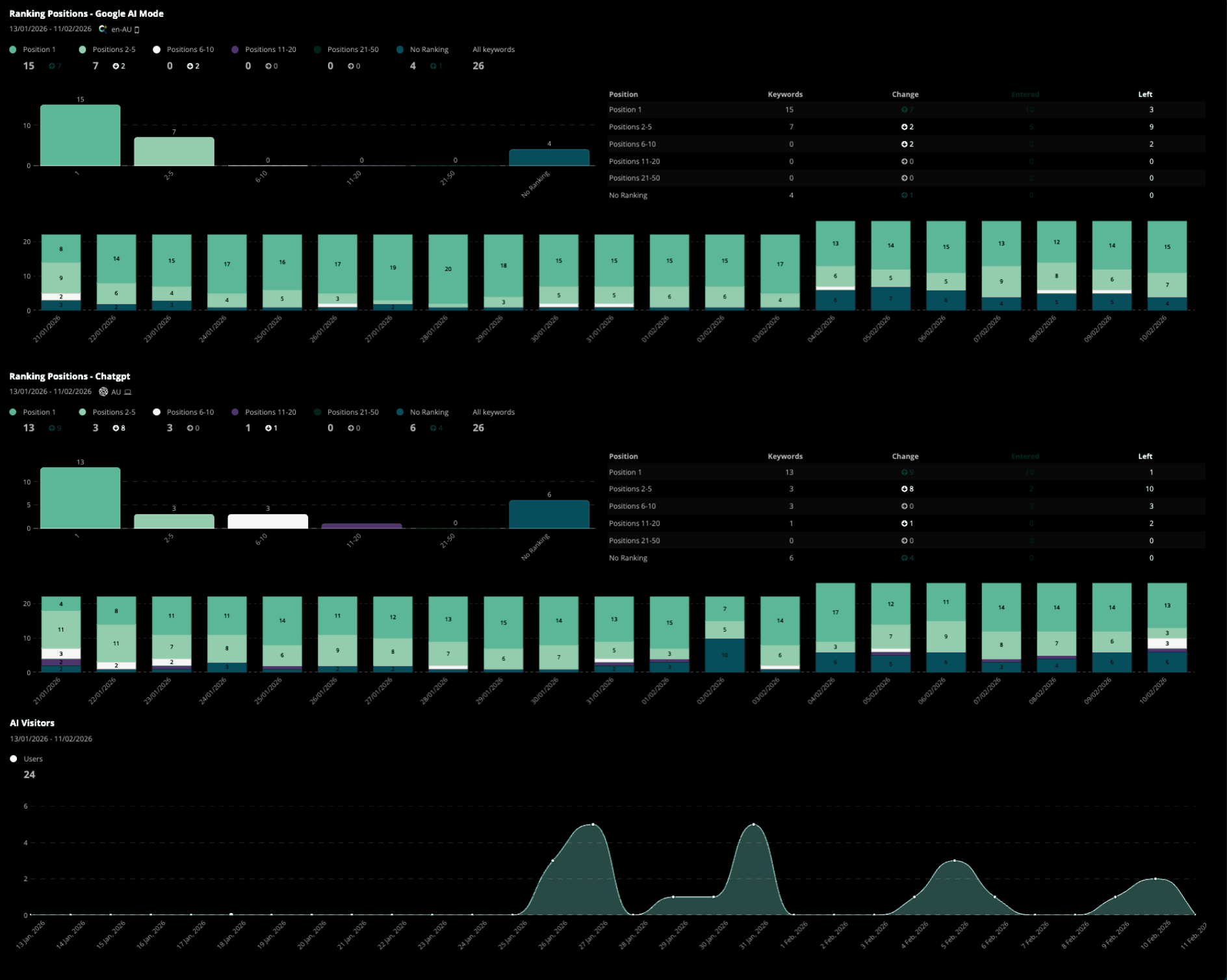
Dashboard visualizing data, featuring stacked bar charts in teal and dark backgrounds, displaying metrics over time.
By Digitaldoor January 12, 2026
What Is Local Business AI Reporting?
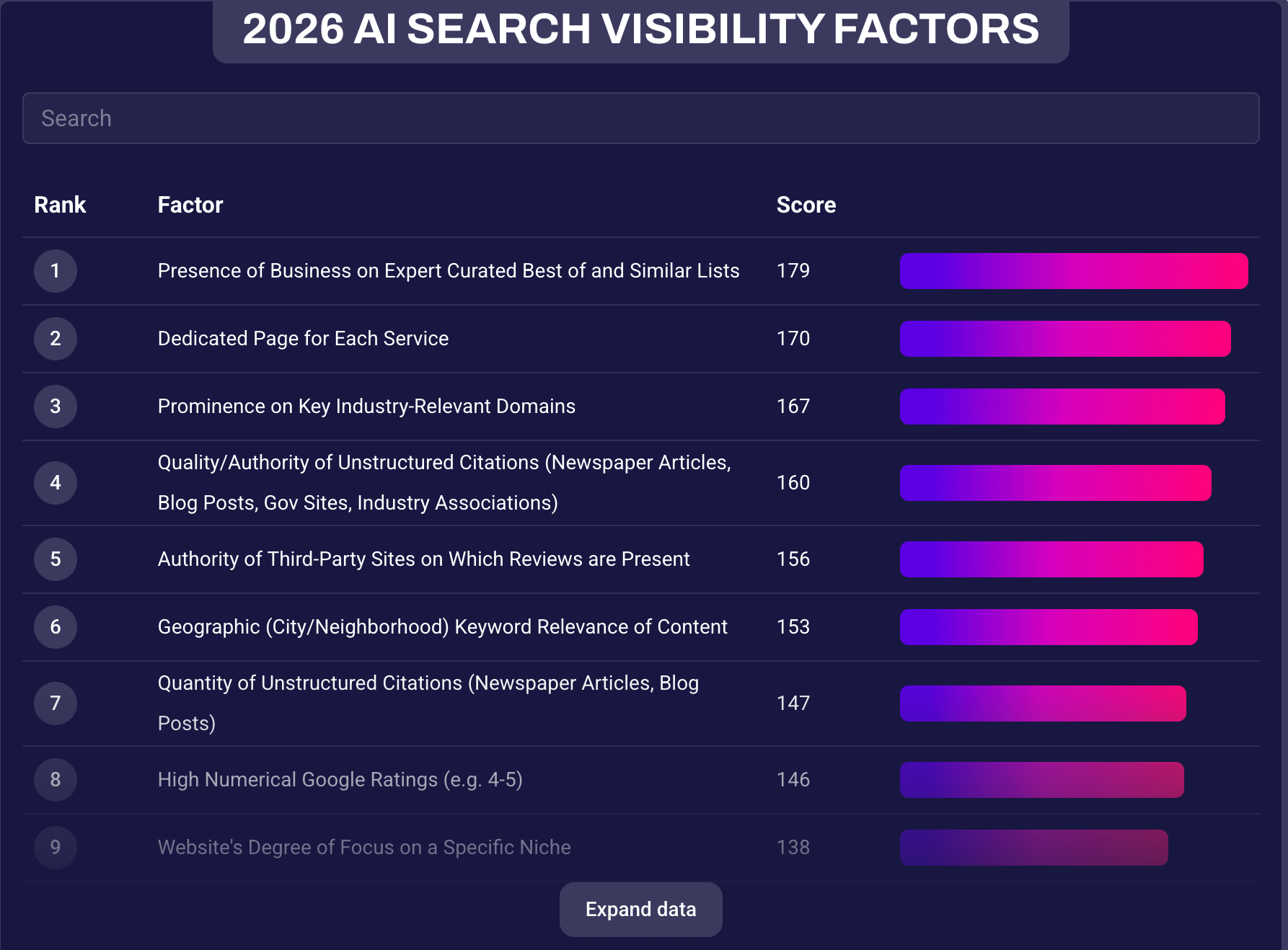
Infographic: 2026 AI search visibility factors. Rankings and scores displayed in purple and pink bar graphs.
By Digitaldoor November 10, 2025
Why Does This Factor Now Outrank Others?

Man in apron smiles, standing in doorway of open restaurant with “We’re Open” sign.
By Digitaldoor October 16, 2025
Remember the days when stuffing a page with keywords was enough to rank on Google? Yeah, those days are long gone. Today, Google isn't just scanning for exact-match keywords — it's trying to understand what people actually mean when they type a query. It’s a major shift from keyword-based search to intent-driven search, and it’s reshaping everything from SEO to how we build conversational AI. In this blog, we’ll break down: What’s changed in Google Search The rise of user intent and semantic search Why the “fan out” strategy matters now more than ever How this shift impacts content strategy, RAG systems, and chatbots
Button with
By Digitaldoor September 17, 2025
Google AI Mode is the latest shift in how Google understands, ranks, and presents search results. It is currently rolling out across the US as we speak. Rather than simply matching keywords, Google AI Mode uses artificial intelligence to understand intent, context, and meaning behind your searches. It's part of what Google calls the Search Generative Experience (SGE) — where AI-enhanced responses pull from a wide context of sources to deliver smarter, faster, and more relevant answers. For local businesses, this is a game-changer.

Woman's face overlaid with colorful binary code, set against a dark background, suggesting technology and data.
By Digitaldoor August 28, 2025
In the next few years, the way people find and interact with local businesses online will change dramatically. And the biggest shift? Your website’s most frequent visitor won’t be a person—it’ll be artificial intelligence (AI)